Recycling, circa Roman times

While visiting Istanbul for the second time, I had promised myself that I would be one of those pretentious tourists and avoid the most touristy places (except for the Blue Mosque) and focus on places where visitors are not as many.
The plan was going well, until one morning, after properly shocking my system with yet another Turkish coffee, I decided that I was too intrigued by the visuals of the so-called Basilica Cistern, and at the end, was ready to pay the hefty 45 EUR price to visit and immerse myself in crowds upon crowds of people underground.
There are over 350 ancient cisterns under Istanbul, but the Basilica Cistern is the biggest and most notorious. Located right across from Hagia Sophia, it is an easy stop to add to your sightseeing list. The lines are no joke, but a guided tour lets you skip right past them.


Built in 532 AD, during the reign of Emperor Justinian I as a supply channel for the great palace of Constantinople, and with the idea to be used in case of a siege, the cistern is 143 meters long, 70 meters wide, with a capacity of more than 80,000 cubic meters of water. The construction is supported by 336 columns, arranged in 12 rows. Here is where I realised Justinian was a fan of recycling - all the columns are different - different styles, different periods. Some are Corinthian, some are Ionic, some are just plain without any markings. All the columns were taken from different temples/buildings and reused in the construction of the Cistern.
The most famous ones, of course, are the two columns featuring the face of Medusa Gorgona and the so-called “Weeping” or “Crying” Column, which appears to be covered in large tears. According to legend, the latter was built in honor of the hundreds of slaves who died during the cistern’s construction - a total of around 7,000 took part. However, as our guide Ibrahim pointed out, this is most likely just a nice story for tourists; such a gesture toward slaves would have been very untypical of the Romans, who most likely couldn’t have cared less. I’d also say the carvings on the column don’t look much like tears to me - but that’s a matter of perspective.

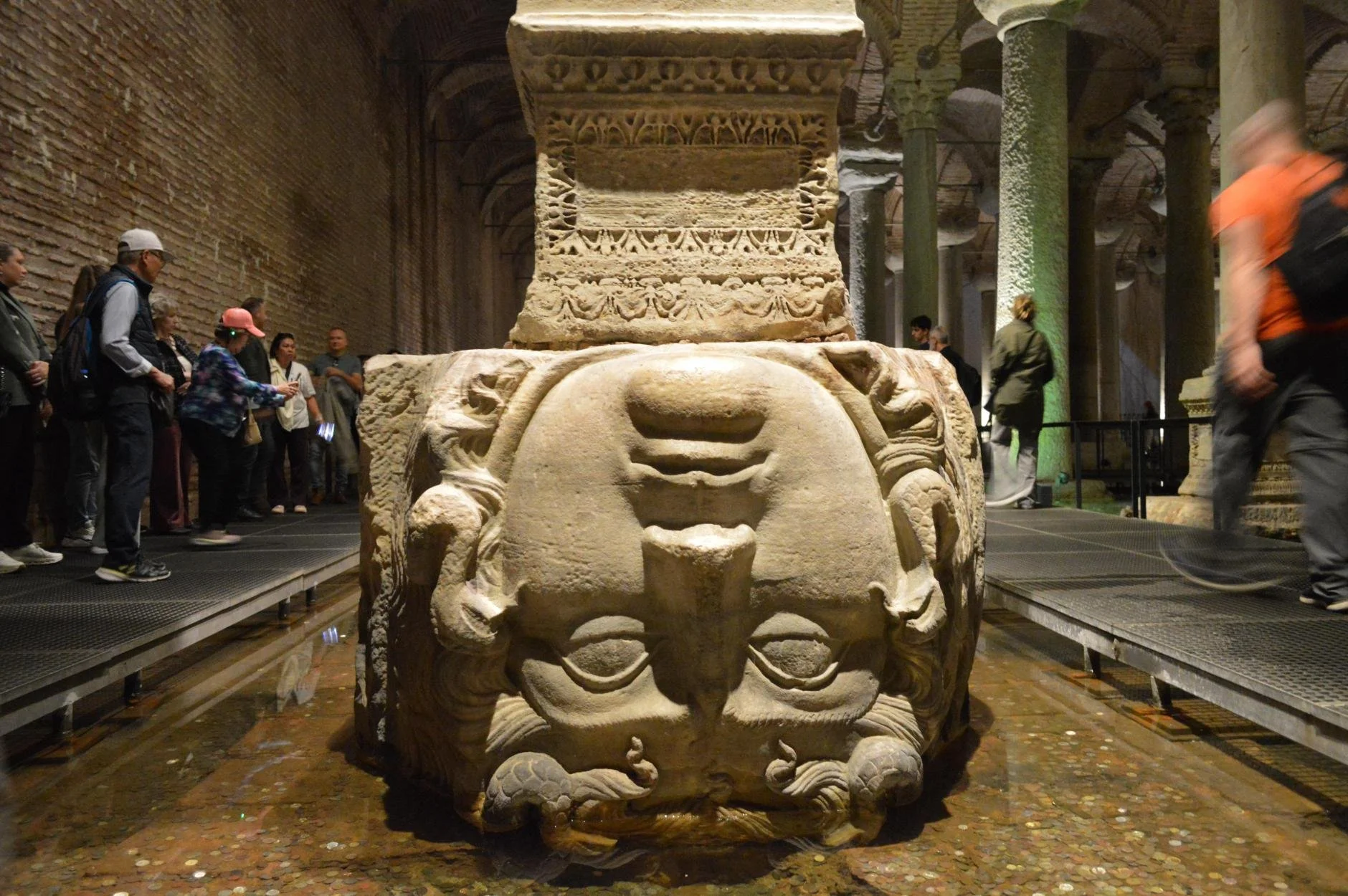
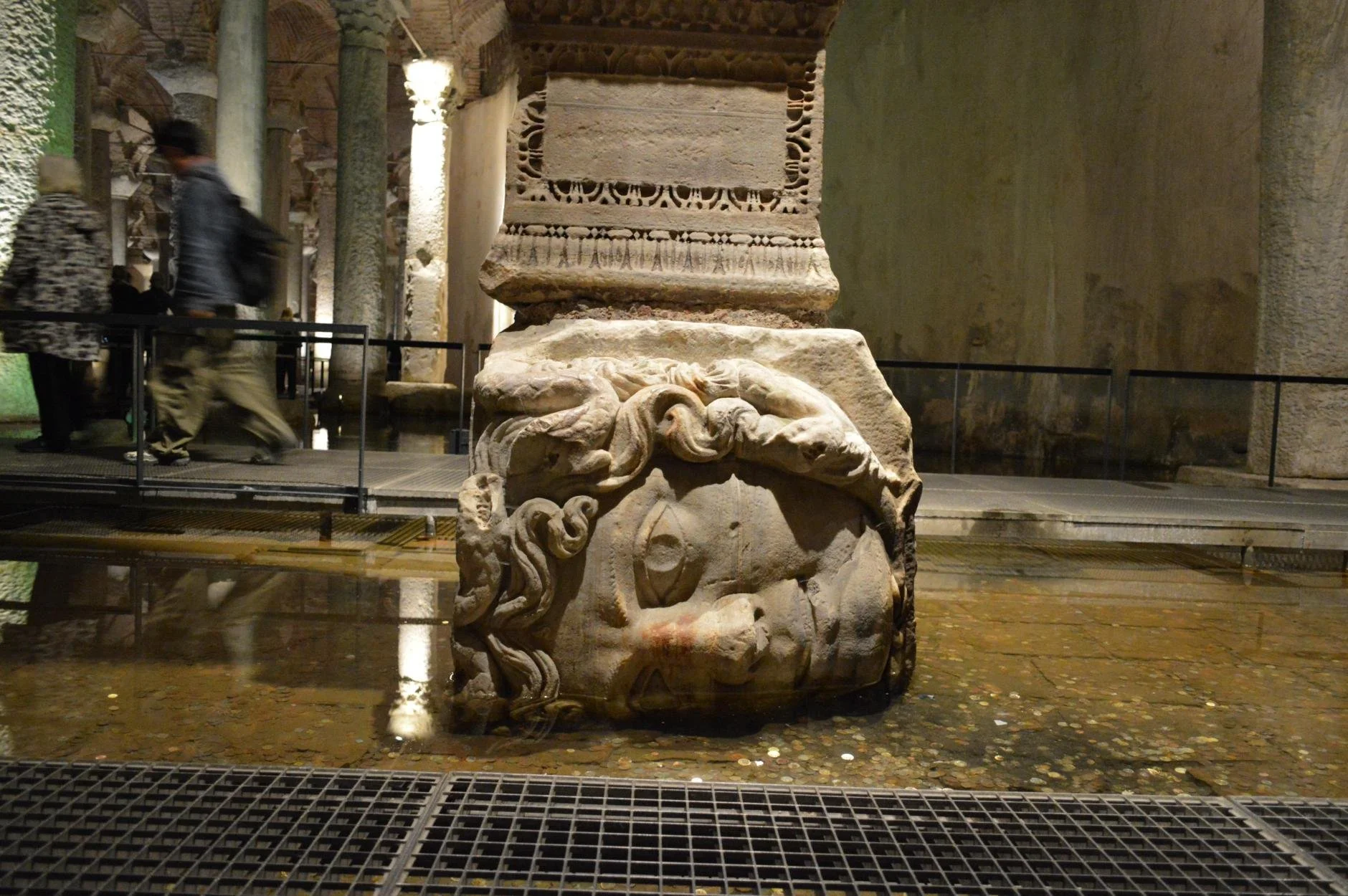
The columns featuring the head of the Medusa were truly very beautiful. An interesting fact is that both are upside down. There are two theories as to why that might be - the first one has to do with an attempt to mock heresy and heretic symbols. The second one is that people feared the Medusa, and this was an attempt to ward her off. In my opinion, the second one sounds more plausible - taking into consideration that in 2025, the population of the Balkan region still engages at large in heretic practices, it doesn’t sound believable, that they would have been squashed in the 6th century, to the point of mockery.
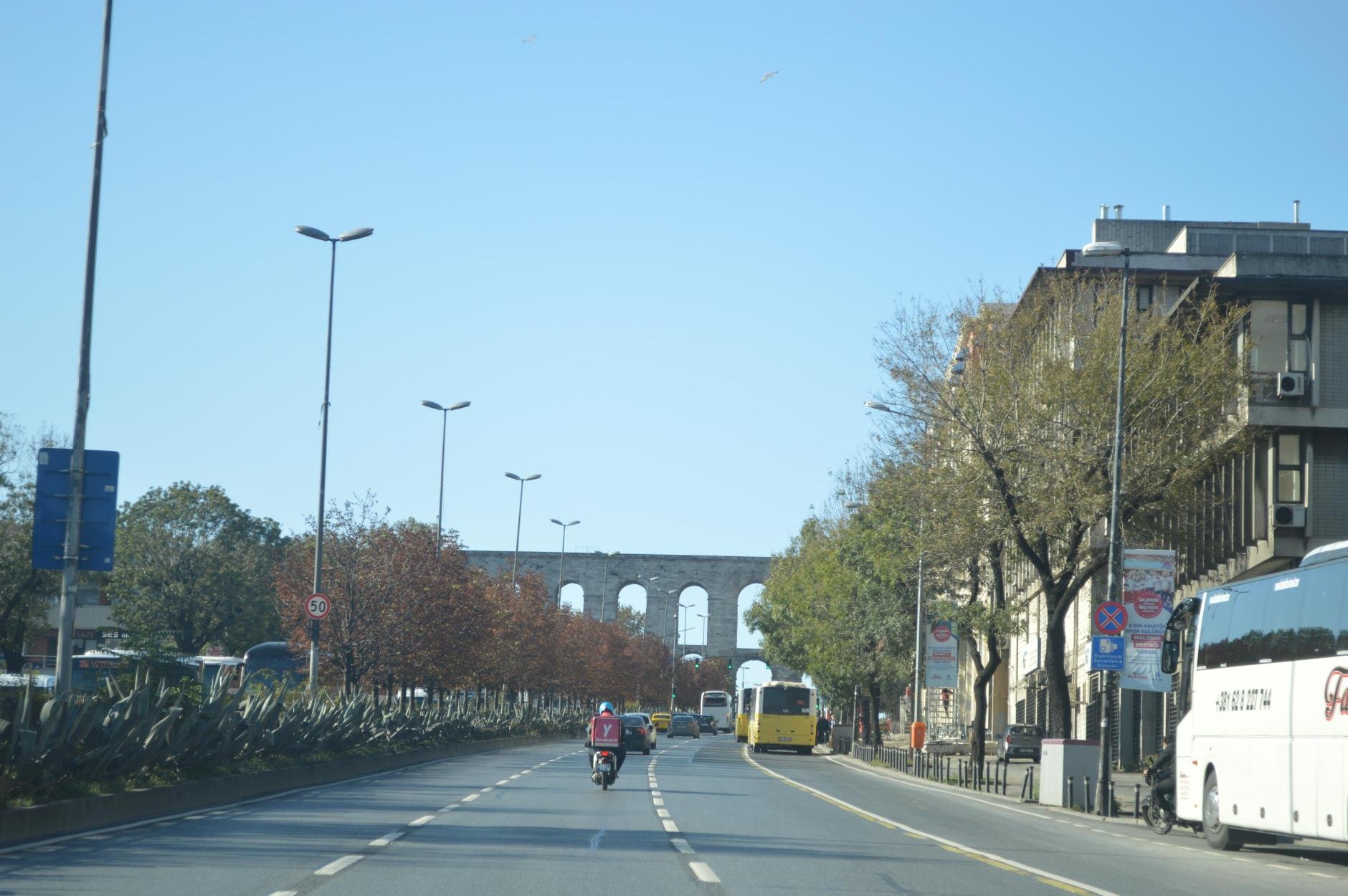
How was this marvelous structure filled, we wonder? Through the Aqueduct of Valens, which supplied the water from the Belgrade Forest. A cool aspect is that you can still see this aqueduct today, if you visit Istanbul.
Now let’s get to the main question - were the nerves from the crowd and the high price worth it? Depends on the perspective.
As our guide Ibrahim said as a conclusion:
“the cistern does not have any significance for history, or any historical event. It is just a water source, but we have put lights on, and left a layer of water, so it now looks very beautiful. It was barely visited by tourists even, until they filmed James Bond: From Russia with Love here. This movie is the reason why there are so many people here today. And just to mention, in the movie, James Bond, and some other guy, take a boat from here to reach the Russian embassy underground. This embassy is 5km away from here, so you can imagine how accurate that movie is.”
I loved Ibrahim! From my time there, the guides that I met were always presenting the reality of how it is, without any fanfare and sugary stories, with such honesty. It’s quite refreshing.
Ibrahim was right - it has no significance in history, but it’s beautiful and I think it was definitely worth it to visit and enjoy such splendid architecture.